
More maintenance data is beginning to reveal something operators have long suspected but struggled to prove: the way maintenance is managed can have a measurable impact on whether investors stay.
That matters because investor retention has often felt difficult to control. An investor decides to leave, a property changes hands, or a management relationship ends, and it can be hard to pinpoint exactly what went wrong.
But as the industry gains access to larger and more connected datasets, that picture is getting clearer.
Property Meld’s maintenance data gives us a unique view into the patterns shaping property maintenance across the industry. When we looked specifically at investor retention, the data revealed meaningful differences between the maintenance experiences of investors who stayed with their property manager and those who left.
Investor retention is showing signs of improvement
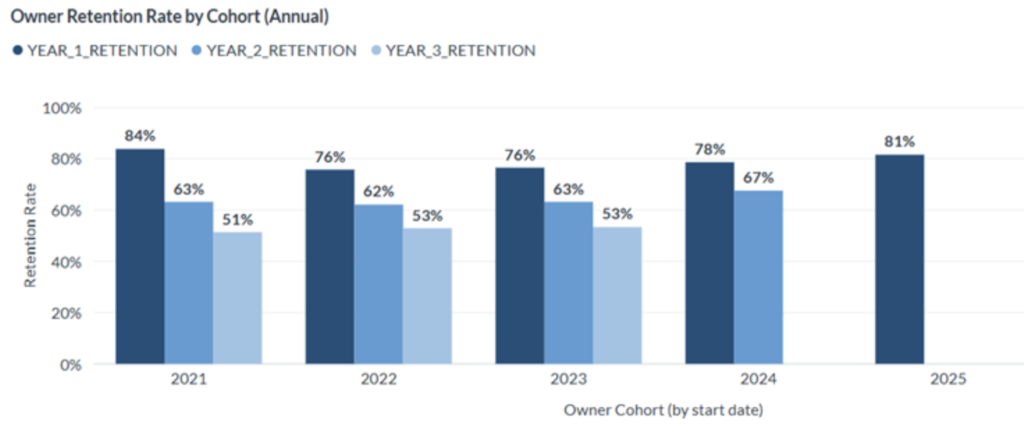
To understand how retention is changing, we look at investors in groups based on when they began working with their property manager. This is called a cohort analysis, but the concept is simple: compare investors who started in the same year and see how many are still there one, two, or three years later.
The encouraging news is that investors who began working with their property manager in 2025 are showing significantly stronger first-year retention than previous groups.
That improvement is important on its own. What’s even more valuable is understanding why some investors stay while others leave.
The maintenance differences are hard to ignore
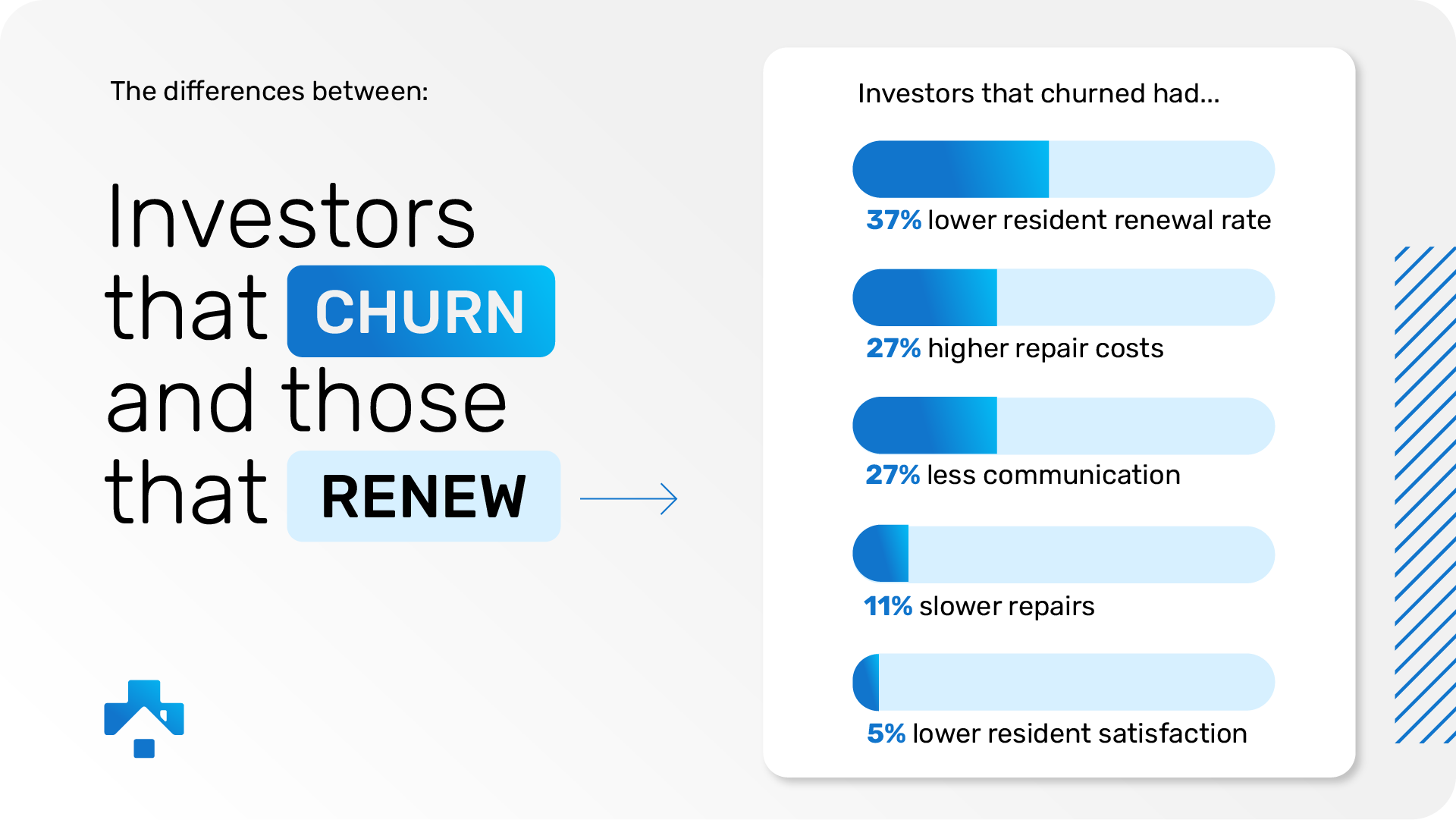
When we compared investors who stayed with those who churned, several maintenance outcomes stood out.
Investors who left experienced:
- 27.4% less communication about repairs
- 10.6% slower repairs
- 4.9% lower resident satisfaction
- 37% lower resident renewal rates
- 27.2% higher repair costs
No single metric determines whether an investor stays. But together, these differences tell a much bigger story.
The investors who remain with their property manager tend to experience an operation where repairs cost less, residents are happier, communication is stronger, and more residents renew.
In other words, investor retention is connected to the health of the entire maintenance operation.
This validates a larger shift in how maintenance should be measured
This is also why Property Meld has spent years developing the Ladder of Maintenance Excellence.
Traditional maintenance reporting tends to focus on lagging indicators: how many work orders were completed, how long they took, or how much was spent.
Those metrics matter, but the growing body of data shows that maintenance leaders need to understand how those operational measures connect to larger business outcomes such as resident retention, investor retention, costs, and portfolio performance.
That connection is becoming increasingly measurable.
And as the dataset grows, operators can move beyond asking, “How did maintenance perform?” and begin asking a much more valuable question:
“Which maintenance decisions are most likely to improve the outcome?”
From benchmarking the past to influencing what happens next
That is where maintenance data becomes especially powerful.
Property Meld has already helped establish industry benchmarks around repair speed, resident satisfaction, maintenance spend, communication, and other key operational measures.
The next evolution is using those millions of maintenance interactions to identify patterns early enough for operators to act on them.
Through Property Meld Ops, we’re beginning to incorporate more of these signals into Perfect Decision products, including proprietary machine-learning models designed to recognize when certain maintenance conditions could put important outcomes at risk.
Instead of discovering months later that costs were too high, residents were unhappy, or an investor relationship was deteriorating, operators can increasingly identify those signals while there is still an opportunity to change the outcome.
That is the real promise of maintenance intelligence.
The industry is moving from simply measuring maintenance performance to understanding how maintenance decisions influence resident retention, investor retention, and returns.
And for the first time, the data is beginning to give operators a roadmap for doing something about it.