
AI is becoming increasingly capable, but its ability to do meaningful work still depends on the context behind it. In maintenance, creating that context has historically been difficult.
Operators are often working across gaps in repair information, from understanding what work was expected and what actually happened to confirming that the work was completed, reviewing documentation, and making sure all of the actual costs associated with the repair were captured.
MAX Verify, powered by MAX Intelligence, is built to change that. By referencing the data captured throughout a repair, MAX can do more of the research required to understand what happened, go deeper into information that would be difficult for a coordinator to review manually, and surface where attention may be needed.
It’s possible because of something we’ve been building long before today’s AI boom: a clean, deeply structured collection of maintenance data.
Moving coordinators from research to decisions
The real opportunity isn’t simply making verification faster. It’s making verification more complete without requiring significantly more human attention.
Verification is the step after a Meld is completed that confirms the work was truly done and documented, but just as importantly, that all of the costs associated with completing it were captured. That can include vendor invoices, technician worklogs, materials, receipts, and other costs incurred throughout the repair.
Having that complete record matters. It gives operators an accurate understanding of what Melds actually cost, helps ensure the full amount can be billed without absorbing costs that were missed, and creates cleaner data to inform future maintenance decisions.
Traditionally, getting there requires a coordinator to gather the information before they can determine whether everything adds up. That research can mean tracing the original issue through diagnosis and completion, reviewing documentation and photos, digging through communication history, comparing what was expected with what actually happened, and determining whether any work or costs may still be missing.
MAX Verify can take on more of that legwork by going deeper into the repair history, bringing the relevant context forward, and identifying where something may warrant review. Instead of asking coordinators to manually find and reconcile all of the information needed to make a decision, MAX can help put a more complete picture in front of them.
That shift is important. Decision-making has always been a valuable part of the coordinator role. The opportunity is to give coordinators better information to make those decisions. Their expertise can be applied with deeper context about what happened and what should happen next, without requiring the same amount of manual research to get there.
AI alone isn’t enough
Building AI that can perform a task is one thing. Giving it enough context to reliably understand maintenance is much harder.
A general AI model can read a work order, interpret an image, or summarize a technician note. Understanding whether the pieces of a repair make sense together requires something deeper: structured information about what was originally reported, how the issue was classified, what happened throughout the repair, what similar repairs have historically required, and how the work was ultimately resolved.
That foundation has been years in the making at Property Meld. Our maintenance taxonomy has grown to classify 6,700 unique issues, but the taxonomy alone isn’t what makes that intelligence valuable. It is connected to years of Meld data showing what it actually takes to resolve those issues.
That history creates a much deeper understanding of maintenance. It can help inform what a repair should cost, how long it should take, who may be best suited to perform the work, whether an estimate is reasonable, and, once the Meld is complete, whether the costs captured appear to represent everything required to resolve it.
When that history is connected with clean data throughout the repair lifecycle, MAX Intelligence has more than individual documents or data points to reference. It has the context needed to understand how those pieces relate to one another.
Verification is only the beginning
The same framework behind MAX Verify can extend much further across the maintenance lifecycle.
Coordinators make decisions and take action at nearly every stage of a repair, from intake and diagnosis to assignment, scheduling, completion, billing, and follow-up. Each of those moments comes with research, information gathering, and repetitive work that MAX can increasingly help with when it has the right maintenance context.
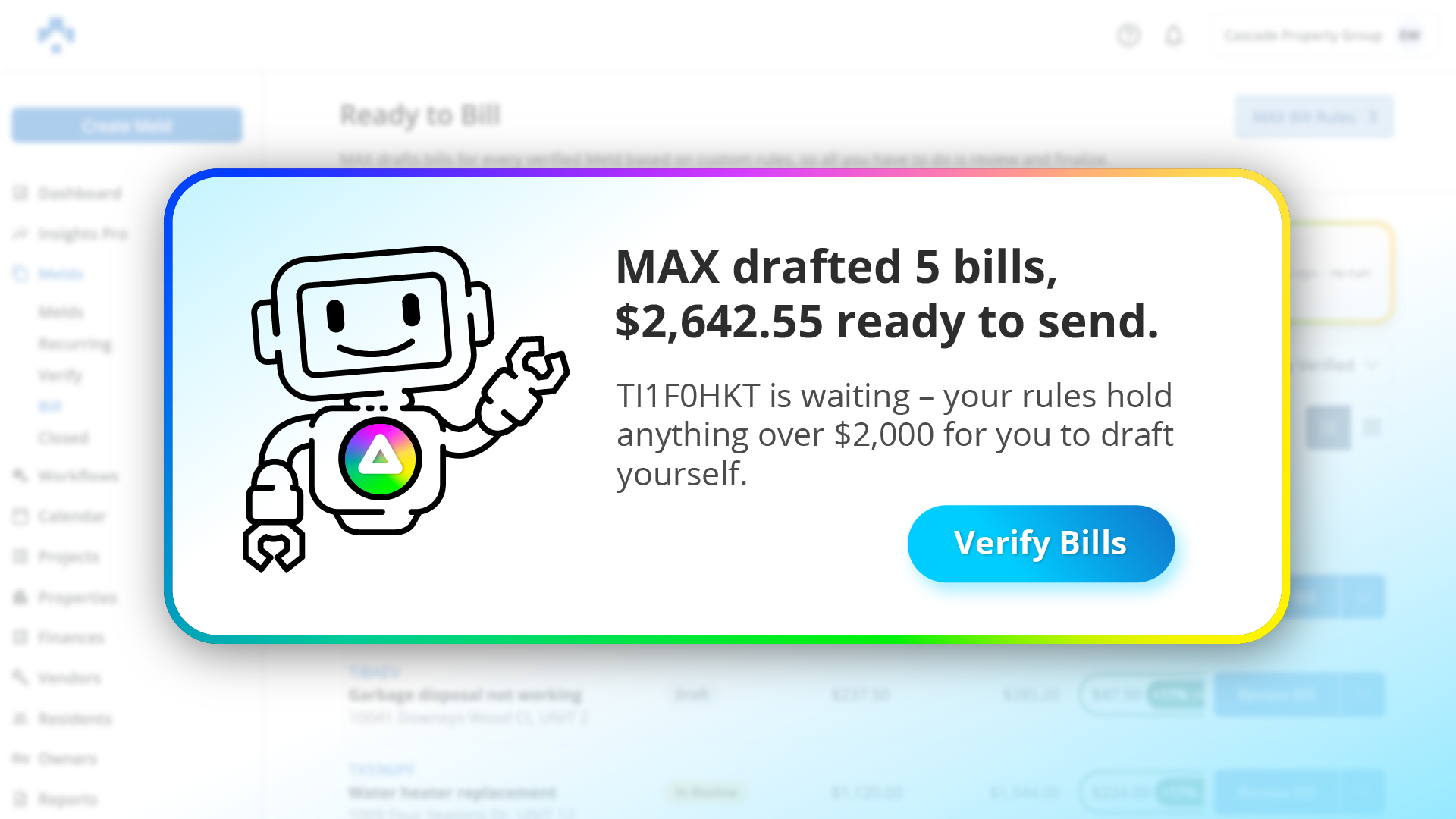
Sometimes that means doing the research and surfacing deeper information so a coordinator can make a better-informed decision. Other times, it can mean actually doing more of the work, such as drafting a bill for a coordinator to review and finalize.
That’s what we’re building toward with MAX Intelligence: expanding what MAX can do throughout the maintenance lifecycle.
As those capabilities expand, the opportunity is not simply to automate more tasks. It’s to give maintenance teams greater capacity, deeper context, and more consistent execution at the moments that influence repair speed, costs, resident outcomes, and ultimately portfolio performance.