
Maintenance Is a Financial Strategy. It’s Time to Treat It Like One.
For years, property management has treated maintenance as an operational necessity: something to manage, contain, and explain after the fact. But the most forward-thinking operators are starting to see it differently. Maintenance isn’t just a cost center. It’s one of the most powerful levers you have for protecting NOI, building investor trust, and running a more profitable business.
The problem? Most teams have been flying blind.
Property Meld’s new TrueCost Financial Suite is designed to change that, not by adding another report to review, but by embedding real financial intelligence into the moment decisions are actually being made.
The Blind Spots Nobody Talks About
The property management industry has historically operated with major financial blind spots. They aren’t caused by lack of effort or talent. They’re caused by a lack of connected insight, and they compound silently until an investor asks a question teams can’t confidently answer.
Blind Spot 1: No Market Context at Decision Time
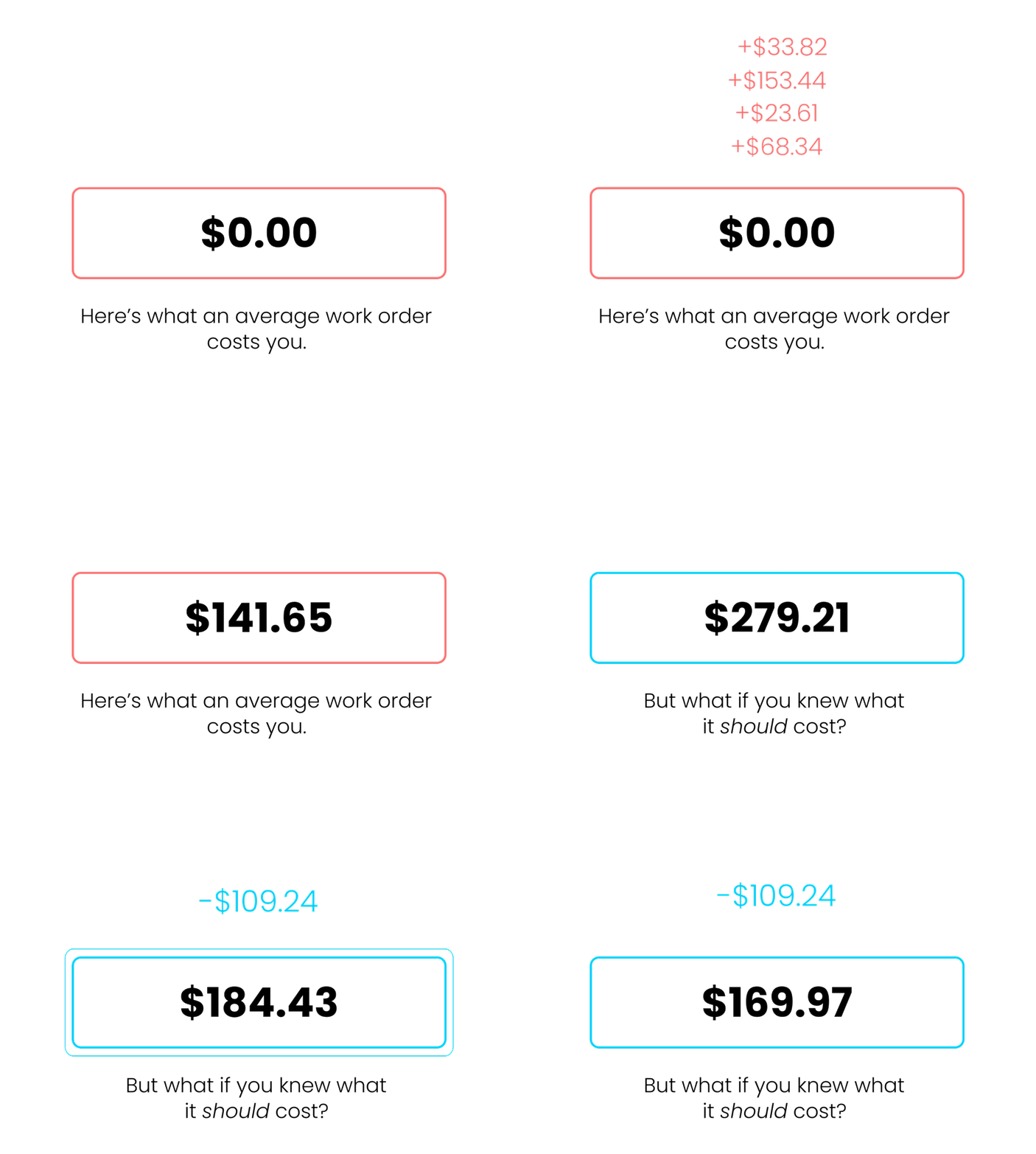
When a vendor quotes $800 to repair an HVAC unit, is that fair? Most operators genuinely don’t know. They rely on vendor relationships, historical averages, or gut feel, none of which hold up under scrutiny. Without real-time regional benchmarks for labor and materials, inconsistent pricing becomes the norm, overpayment is invisible, and every cost conversation with an owner carries risk.
Blind Spot 2: No Financial Visibility During Diagnosis
The most consequential financial decisions in property management happen during maintenance triage. Repair or replace? How urgent is this? What does deferred action actually cost? These decisions get made without a true scope of work, without predictive cost data, and without any line of sight into downstream financial impact. The result: reactive investor conversations, budget overruns, and operators who are narrating what happened instead of guiding what happens next.
Blind Spot 3: Maintenance and Accounting Are Speaking Different Languages
Maintenance teams work in the field. Finance teams work in spreadsheets. Between them sits a gap filled with disconnected tools, incomplete notes, and manually reconstructed records. Bills arrive through multiple channels without context. Costs, markups, and labor have to be pieced together after the fact. Double payments and missed charges are inevitable. Finance doesn’t become a strategic function, it becomes forensic. And a significant portion of the maintenance budget gets held back for the unknown, limiting confidence and hiding savings opportunities that no one can clearly see.
The Real Cost of Financial Fog
These blind spots don’t just create internal inefficiencies. They erode the most valuable currency in property management: investor trust.
Owners don’t see the work. They see the bill. When maintenance costs arrive without context, documentation, or a clear rationale, confidence doesn’t just dip, it compounds into friction, questions, and eventually churn. What should be a value-add becomes a pressure point.
The gap between maintenance decisions and financial outcomes isn’t an execution problem. It’s a structural one. And it’s been hiding in plain sight.
What Changes When You Have Real Financial Clarity
Property Meld built the TrueCost Financial Suite to close this gap, bringing market context, predictive cost intelligence, and financial visibility into the maintenance workflow itself, not as an afterthought.
The shift this creates isn’t incremental. Operators who’ve had early access describe it in terms that go beyond efficiency. One put it this way:
“This is going to shine — not a flashlight — this is going to shine a spotlight so that I can show this data internally and say, look, why are we ashamed that we’re making money? That’s what we do.”
That’s not just improvement. That’s a fundamental change in how you run a business.
From Cost Center to Margin Lever
What TrueCost represents isn’t just a product feature. It’s a repositioning of what maintenance can be inside a property management business.
When operators have market context at the moment a decision is made, they stop guessing and start leading. When finance teams have shared visibility into what’s happening in the field, they stop reconstructing reality and start shaping it. When investors receive maintenance documentation with real context and clarity, trust compounds instead of eroding.
The industry has operated with these blind spots for too long, not because operators didn’t care, but because the tools didn’t exist to connect insight to action in real time.
That’s changing now.
Real-time financial intelligence in maintenance is no longer a roadmap item. It’s here. And the operators who embrace it first won’t just run more efficient maintenance operations, they’ll run fundamentally more defensible, more profitable businesses.
TrueCost isn’t a reporting tool. It’s the beginning of a new standard.